AO Edited
Sótano de las Golondrinas (Cave of Swallows)
The largest cave shaft in the world is home to thousands of birds and popular with BASE jumpers.
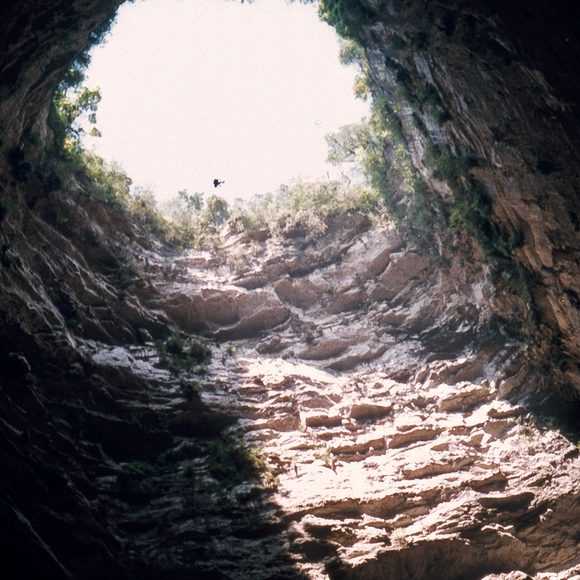
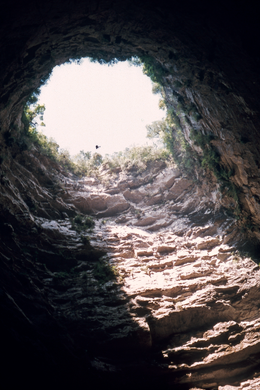
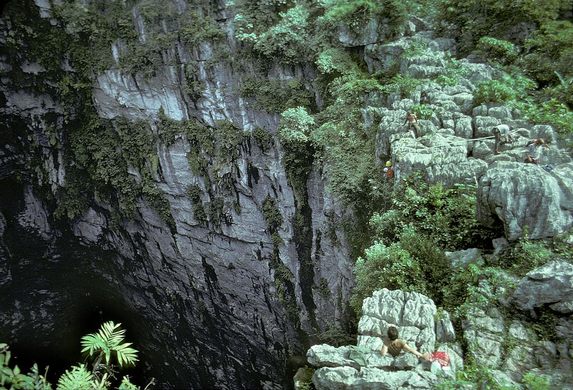
Simply staring down into the Cave of Swallows is a test of one’s fortitude.
Known as a pit cave, it is a vertical shaft, essentially a 160- to 205-foot gaping hole in the forest floor which drops straight down 1,220 feet – 1,904 from the higher edge – before reaching the cave floor. It is deep enough to fit the Statue of Liberty standing on her own shoulders, the Eiffel tower, or the Chrysler building.
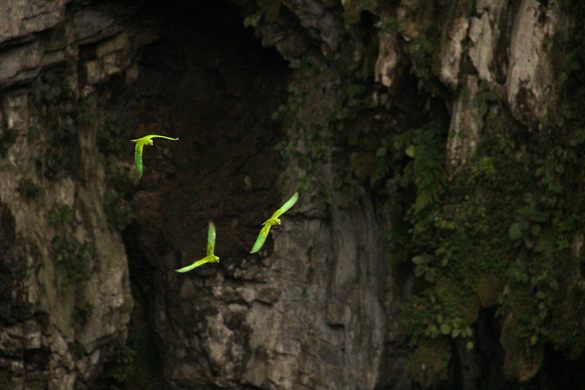
Called Sótano de las Golondrinas in Spanish and the Cave of Swallows in English, it is the largest known cave shaft in the world and the second deepest pit in Mexico. The cave gets its name from the green parakeets and white-collared swifts that live along its walls. Each day the birds fly in concentric circles up the cave shaft before the flocks come spilling out of the of the hole into the jungle.
The cave has more recently become the home to a number of newer aerial species, namely vertical cavers and base-jumpers. A popular destination with the extreme sports enthusiasts, it is tall enough for the BASE jumpers (BASE stands for Buildings, Antennas, Spans, and Earth, all things they enjoy flinging themselves off of) to leap off the edge and free-fall for a couple of seconds before deploying their parachutes. While it takes about ten seconds to reach the bottom, the ascent back up is slower taking between 40 minutes and 2 hours.
While the cave has long been known to the local Huastec people, it was first explored by outsiders in 1966 by T. R. Evans, Charles Borland and Randy Sterns. The cave is so deep that when rappelling, which can easily take an hour, the friction can cause the rope and equipment to heat up to dangerous levels, so spray water bottles are used to cool the equipment as one descends.

Community Contributors
Added by




Plan Your Trip
The Atlas Obscura Podcast is Back!




Follow us on Twitter to get the latest on the world's hidden wonders.
Like us on Facebook to get the latest on the world's hidden wonders.
Follow us on Twitter Like us on Facebook