AO Edited
Viejo San Juan Parangaricutiro
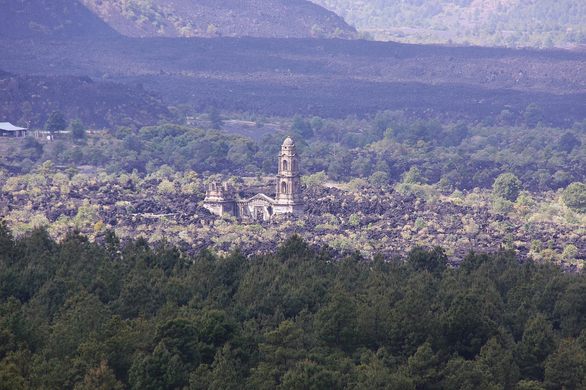
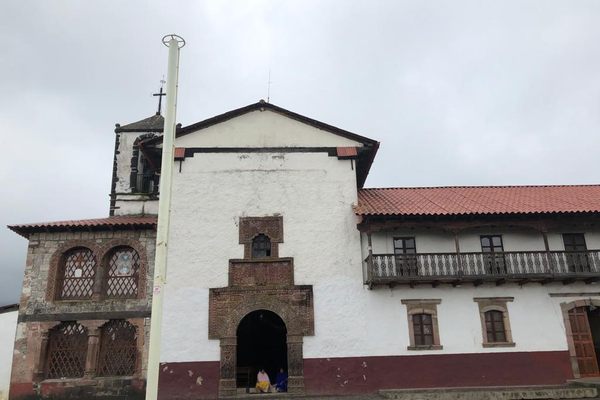
This church, buried halfway in lava rock, is all that remains of a Mexican village destroyed by a volcano.
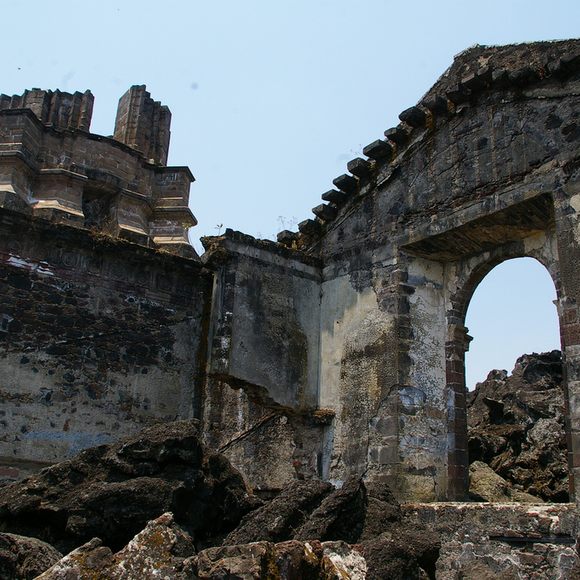
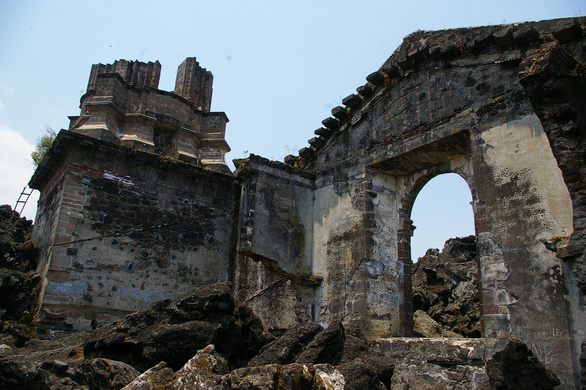
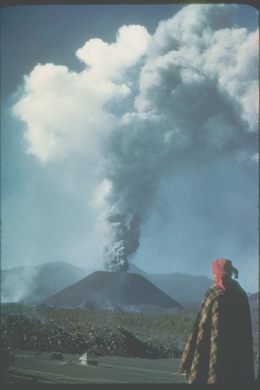
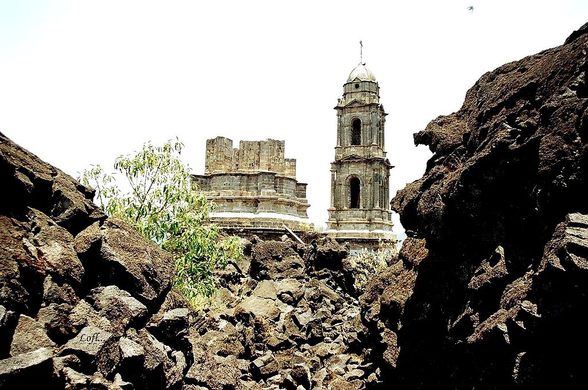
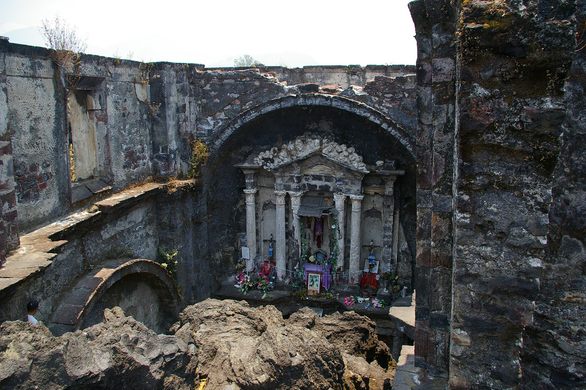
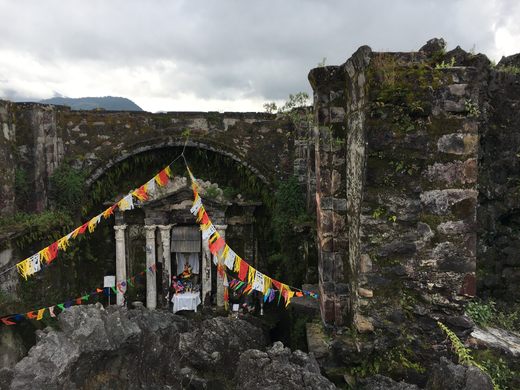
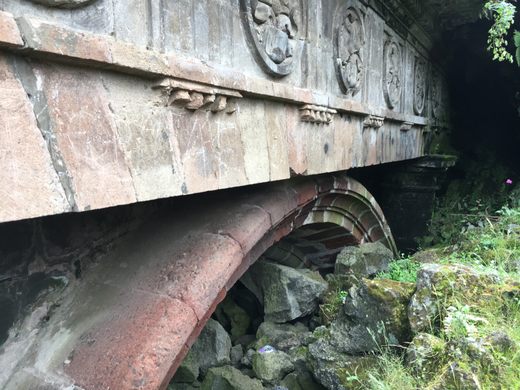
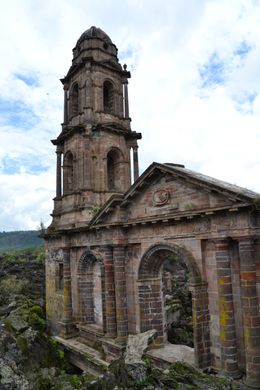


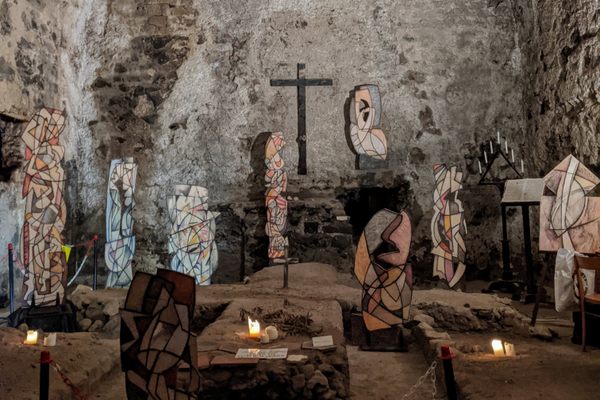
On February 20, 1943, a new volcano began to rise from a cornfield, erupting and slowly consuming two villages in lava and ash. It’s said that, as Parícutin erupted, the San Juan Parangaricutiro church bells danced, two miles away. The bells sounded, the ground rumbled, and the lava began to flow. It took a year for the lava to reach and melt the rock of the cemetery walls around this small church, but the lava did finally flow over the graves, leaving the church tower and altar untouched. The Parícutin volcano continued to erupt for another eight years, but the small church withstood it all.
Luckily, the townspeople evacuated long before the lava reached the town, and no one was killed. They quickly began building a new church — the Nuevo San Juan Paragaricutiro — in a nearby area unaffected by the eruption.
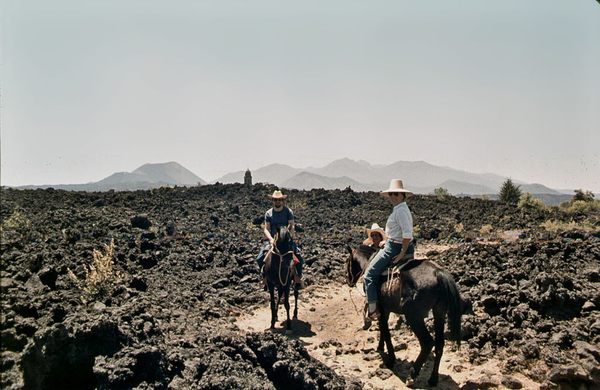
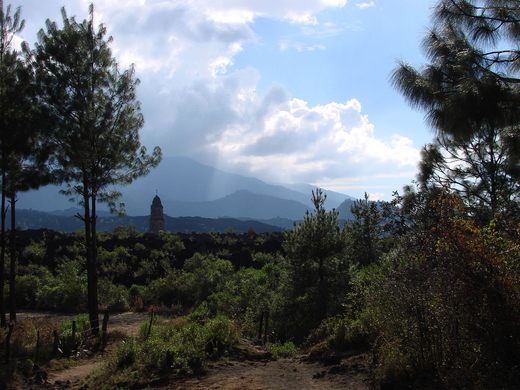
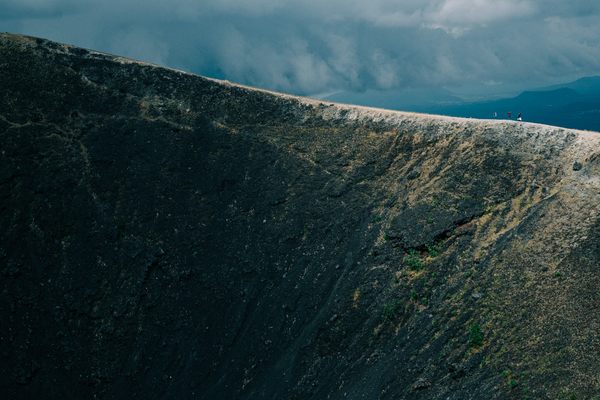
Today, the original San Juan Parangaricutiro church still stands, halfway buried in solidified lava rock, with the massive cinder cone of Parícutin looming in the background. It is all that remains of the village. Climbing over the volcanic rock to see the church that survived the catastrophe has become a tourist experience and a major source of revenue for the region.
The Paricutin volcano is the youngest volcano in the world, and it has been an exceptional opportunity for geologists to study how volcanoes are formed. If you want to see the actual volcano erupting, watch the film Captain from Castile, with Cesar Romero as Hernan Cortes. The film was shot in Michoacan and Guerrero. Its climactic final scene shows the billowing plume as an unintended backdrop.
Know Before You Go
A one hour walk from the bus stop in Angahuan - Cross the highway and follow the road with wire arches for 10 min, turn right at the main town square, after 200m take the left fork and follow that road out of town to the Tourist Center where a well marked path to the church begins. Or hire a guide from town.19°31'59.58"N 102°14'49.88"W



Plan Your Trip
The Atlas Obscura Podcast is Back!




Follow us on Twitter to get the latest on the world's hidden wonders.
Like us on Facebook to get the latest on the world's hidden wonders.
Follow us on Twitter Like us on Facebook